✔ Free Shipping Above ₹499. ✔ COD Available. 👉 Sign Up Now & Get Upto ₹1000. 👈

Ayurveda for Stress and Sleep in the Digital Age

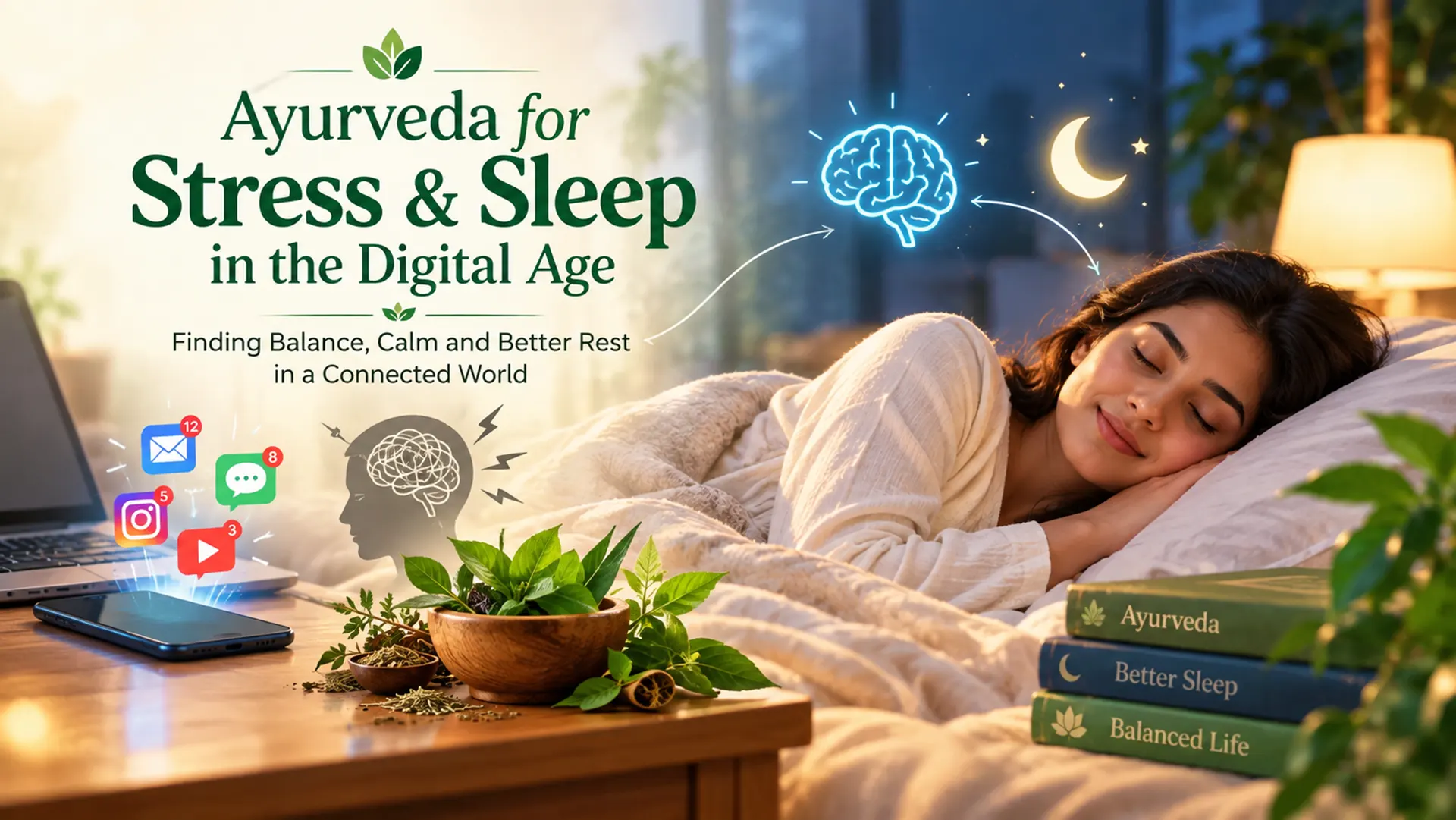
Finding Balance, Calm and Better Rest in a Connected World
We live in a world that rarely switches off.
Smartphones keep us connected to work, family, friends and information around the clock. Laptops allow us to work from almost anywhere, while social media, streaming platforms and online entertainment can keep our minds engaged late into the night.
Technology has undoubtedly made modern life easier. However, our increasingly digital lifestyle has also created new challenges for relaxation and sleep.
For many people, the day begins by checking a phone and ends with scrolling through social media. Work emails may arrive after dinner, notifications can interrupt quiet moments, and the temptation to watch “just one more” video can push bedtime later and later.
Over time, this pattern may contribute to a cycle of mental stimulation, delayed sleep and daytime tiredness.
A 2025 systematic review and meta-analysis involving 21 cohort studies and more than 548,000 participants found that greater daily screen time was associated with shorter sleep duration, delayed bedtime, insomnia symptoms and difficulty initiating sleep. The researchers also emphasized that these findings demonstrate associations and do not by themselves establish that screen exposure directly causes every sleep problem. [1]
This is where the traditional principles of Ayurveda can offer an interesting perspective.
Ayurveda places considerable emphasis on daily routine, balance, mindful living and the relationship between the body, mind and environment. Although traditional Ayurvedic concepts should not automatically be equated with modern medical diagnoses, many lifestyle principles can complement contemporary approaches to healthy sleep.
In the digital age, Ayurveda can therefore be viewed not simply as a collection of herbs or treatments, but as a reminder to create space for rhythm, relaxation and recovery.
Understanding Stress in the Digital Age
Stress is a natural response to challenges and demands. Short-term stress can help us respond to difficult situations, but persistent stress can make relaxation more difficult.
Modern technology can contribute to a state of constant mental stimulation.
Think about a typical day:
- You wake up and immediately check your phone.
- You receive work messages throughout the morning.
- Social-media notifications interrupt your attention.
- You consume news during breaks.
- You work on a computer for several hours.
- You continue checking messages during dinner.
- You watch videos or scroll through social media before bed.
The body may be physically tired, but the mind can remain highly engaged.
This distinction is important. Going to bed does not necessarily mean that the mind has entered a state of rest.
A healthier evening routine therefore involves creating a transition between daytime activity and nighttime relaxation.
Ayurveda and the Importance of Sleep
In Ayurveda, sleep is traditionally known as Nidra and is regarded as an important component of overall wellbeing.
Traditional Ayurvedic approaches generally consider sleep in the context of an individual’s lifestyle, routine, diet, activity and mental state.
Ayurveda emphasizes the importance of living in harmony with natural rhythms. This idea can be particularly relevant in today’s environment, where artificial light, digital entertainment and work schedules can blur the traditional boundaries between day and night.
From an Ayurvedic lifestyle perspective, supporting healthy sleep can involve:

Shilajit LixPro Men’s Health Syrup – Energy, Stamina & Testosterone booster (500ml)
Your daily energy, stamina, vitality and testosterone booster with Amravathy Herbals Shilajit LixPro Men’s Health Syrup. Formulated with powerful Ayurvedic ingredients like Shilajit, Ashwagandha, Gokshur, and Safed Musli, this herbal tonic supports testosterone levels, reduces stress, and enhances overall male performance.
- Maintaining a regular daily routine
- Eating appropriately for one’s individual needs
- Engaging in suitable physical activity
- Creating a calming evening routine
- Reducing unnecessary stimulation before bedtime
- Practicing relaxation and mindfulness
- Maintaining a comfortable sleep environment
Some Ayurvedic traditions associate disturbed sleep with an aggravated Vata state, particularly when restlessness, excessive thinking or irregular routines are present.
These are traditional Ayurvedic concepts and should not be interpreted as direct equivalents of modern medical diagnoses such as insomnia or anxiety.
Nevertheless, the practical emphasis on routine and calming the mind can fit naturally alongside modern sleep-hygiene practices.
How Screen Time Can Affect Sleep
Digital devices can influence sleep through several pathways.
1. Delayed Bedtime
One of the simplest explanations is behavioral.
People may intend to go to bed at 10:30 PM but continue scrolling, watching videos or answering messages until midnight.
The result is less time available for sleep.
The 2025 systematic review mentioned earlier found that each additional hour of daily screen time was associated with approximately 3–5 minutes less total sleep and a later bedtime of around 13 minutes per hour of screen time in the studies that examined these outcomes. [1]
2. Mental Stimulation
Not all screen activity is equally stimulating.
A relaxing documentary may affect a person differently from an emotionally intense discussion, competitive video game or stressful work email.
The content itself can keep the mind engaged.
3. Notifications
Notifications can make it difficult to establish a genuine period of uninterrupted relaxation.
Even when we do not respond immediately, knowing that another message could arrive can encourage us to keep checking the device.
4. Light Exposure
Screens emit light, including short-wavelength light. Evening light exposure can interact with the body’s circadian system.
However, the science surrounding blue light is more nuanced than simply stating that “blue light causes insomnia.”
A National Sleep Foundation expert consensus statement reviewed a large body of research on screen-based digital media and sleep and considered both screen use and pre-bedtime light exposure. The statement also emphasized behavioral strategies for reducing potential negative effects. [2]
Research specifically examining blue-light-filtering glasses has produced mixed results. A 2023 Cochrane review found that the evidence regarding whether blue-light-filtering spectacle lenses improve sleep quality was uncertain, with inconsistent findings among the included randomized trials. [3]

Shilajit Lix Vitality Support Capsules – Energy, Stamina & Testosterone Booster capsules (550mg)
Boost your daily energy, stamina, and vitality with Amravathy Herbals Shilajit Lix Capsules, a powerful Ayurvedic formulation enriched with Shilajit, Ashwagandha, Gokshur, Safed Musli, and Krounchbeej. Designed to support testosterone levels, reduce stress, and enhance overall performance—naturally.
This suggests that simply purchasing blue-light-blocking glasses should not be considered a complete solution to poor sleep.
7 Ayurvedic-Inspired Practices for Better Sleep
1. Create a Digital Sunset
One of the simplest ways to bring more calm into the evening is to establish a “digital sunset.”
This means choosing a particular time when unnecessary digital activity ends.
For example:
9:30 PM – Digital Sunset
After this time, you might:
- Stop checking work emails.
- Put social-media apps aside.
- Silence unnecessary notifications.
- Avoid stimulating online content.
- Keep your phone away from the bed.
The exact time is less important than consistency.
If you need your phone for emergencies or essential communication, you do not necessarily have to switch it off completely. Instead, activate a suitable focus or do-not-disturb setting while allowing important contacts to reach you.
The objective is to create a boundary between the digital day and the restful night.
2. Follow a Consistent Bedtime Routine
Our bodies often respond well to predictable routines.
Instead of going directly from work or social media into bed, create a gradual transition.
A simple routine could look like:
Dinner → gentle movement → reduced screen use → personal care → relaxation → bed
You might read a physical book, listen to quiet music, practice gentle breathing or spend a few minutes journaling.
The routine does not have to be elaborate.
Consistency is more important than complexity.
3. Practice Gentle Self-Massage
Abhyanga, or Ayurvedic oil massage, is traditionally practiced as part of Ayurvedic self-care.
A gentle self-massage can become a relaxing evening ritual. Rather than treating it as a guaranteed remedy for insomnia, it can be viewed as a mindful activity that encourages slowing down.
Some people may choose to massage areas such as the feet, hands, shoulders and other comfortable areas before bathing.
However, topical oils are not suitable for everyone. People with allergies, sensitive skin or existing skin conditions should use caution and seek professional advice when appropriate.
“Natural” does not automatically mean “risk-free.”
4. Eat Mindfully in the Evening
Food and sleep are closely connected to daily routine.
A practical evening approach may include having dinner at a reasonably consistent time and avoiding meals that are excessively heavy immediately before bed if they cause discomfort.
Consider:
- Eating slowly.
- Avoiding excessive late-night snacking.
- Limiting caffeine later in the day.
- Choosing foods that suit your individual dietary needs.
- Allowing sufficient time between a heavy meal and bedtime.
Ayurveda traditionally individualizes food choices according to a person’s constitution, digestion and lifestyle.
There is therefore no single dinner that is perfect for everybody.
5. Use Gentle Breathing Practices
Sometimes the body is ready for sleep while the mind is still working.
A few minutes of slow, comfortable breathing can provide a transition.
Sit comfortably and allow your breathing to become steady.
You might simply focus on:
Inhale gently → exhale slowly → repeat.
There is no need to force the breath or hold it for long periods.
The goal is to bring attention away from emails, notifications, plans and worries and toward the present moment.
For people with breathing disorders or other health conditions, specialized breathing practices should be learned from an appropriately qualified professional.
6. Make the Bedroom a Restful Space
Your bedroom environment can reinforce your bedtime routine.
Consider making the bedroom:
- Quiet
- Comfortable
- Dark or appropriately dim
- Free from unnecessary work materials
- Less associated with entertainment and digital activity
If possible, keep the phone away from your pillow or bedside table.
Instead of reaching for the phone whenever you wake during the night, create a habit of keeping the bedroom focused on rest.
7. Practice Mindfulness
Digital life encourages constant attention switching.
Mindfulness encourages the opposite.
A simple mindfulness practice can involve sitting quietly, observing the breath and noticing thoughts without immediately following them.
You do not need to completely empty your mind.
Thoughts will naturally appear.
The practice is simply to notice them and gently return attention to the present experience.
Even five minutes can become a useful beginning.
Yoga, Ayurveda and Relaxation
Yoga is often discussed alongside Ayurveda, although the two are distinct traditional systems.
Gentle yoga can be incorporated into an evening wellness routine through stretching, comfortable postures, breathing and relaxation.
Research into traditional and complementary approaches to insomnia is growing. However, evidence quality varies considerably between individual practices and studies.
A recent systematic review specifically examining Ayurvedic interventions for primary insomnia in older adults identified studies involving approaches such as Shirodhara, Nasya and herbal therapies including Tagara, Jatamansi and Ashwagandha. The review reported promising findings but also identified important limitations, including small sample sizes, limited comparator groups and a scarcity of high-quality studies specifically involving older adults. [4]

Immuno T-Pro Tablet for Cough, Cold & Immunity Support
Amravathy Herbals Immuno T-Pro Tablet is an Ayurvedic herbal formulation designed to support respiratory wellness, soothe throat irritation, and help support immunity naturally. Enriched with Tulsi, Yashtimadhu, Dalchini, Lavang, Sunthi, Kali Miri and Lemon Grass, these spearmint-flavoured tablets may help provide natural support for cough, cold and throat discomfort.
This distinction is important.
Ayurvedic therapies may have a role in supportive and integrative wellness, but traditional use should not automatically be described as scientifically proven treatment.
What About Ayurvedic Herbs for Sleep?
Ayurveda includes numerous herbs traditionally associated with relaxation and wellbeing.
Some commonly discussed examples include:
- Ashwagandha
- Jatamansi
- Tagara
- Brahmi
However, herbal products deserve the same thoughtful consideration as any other health intervention.
Research quality varies between herbs, formulations, doses and populations.
A person taking prescription medicines should not assume that an Ayurvedic herb is automatically compatible with those medicines.
Pregnant or breastfeeding individuals, children, older adults and people with chronic health conditions may require additional caution.
If you are considering an Ayurvedic herbal product for sleep or stress, speak with a qualified healthcare professional or appropriately trained Ayurvedic practitioner.
Do not increase the dose simply because a product is plant-based.
Ayurveda and the Modern Concept of Sleep Hygiene
Interestingly, many practical Ayurvedic lifestyle principles overlap with modern sleep-hygiene recommendations.
| Ayurvedic-inspired principle | Modern sleep-health perspective |
|---|---|
| Regular daily routine | Consistent sleep schedule |
| Calming evening rituals | Wind-down routine |
| Reduced stimulation | Limiting stimulating activities |
| Mindful living | Stress-management practices |
| Appropriate physical activity | Regular daytime activity |
| Comfortable sleep environment | Sleep-friendly bedroom |
| Moderation in evening habits | Avoiding behaviors that interfere with sleep |
This does not mean that Ayurveda and modern sleep medicine are identical.
Rather, it shows that some practical habits from different traditions can point toward a similar principle:
The body benefits from a predictable transition from activity to rest.
A Simple Ayurvedic-Inspired Night Routine
Here is an example of how you might structure your evening.
7:30 PM – Dinner
Have a comfortable evening meal and step away from work-related activity.
8:00 PM – Gentle Movement
Take a short walk or perform light stretching.
8:30 PM – Reduce Screen Stimulation
Complete unnecessary digital activities and avoid stressful online content.
9:00 PM – Digital Sunset
Silence non-essential notifications and keep the phone away from your sleeping area.
9:15 PM – Relaxation
Read, journal, practice gentle breathing or follow a calming self-care ritual.
9:45 PM – Prepare for Bed
Dim the lights, complete personal care and move into a quiet environment.
10:00 PM – Rest
Get into bed and allow yourself to relax rather than trying to force sleep.
This schedule is only an example. Your ideal routine should reflect your work, family responsibilities, lifestyle and individual sleep needs.
Don’t Make Sleep Another Source of Stress
An important part of improving sleep is avoiding excessive pressure around sleep.
Someone who struggles to sleep may begin checking the clock repeatedly:
“It’s already 1 AM.”
“I only have five hours left.”
“Why can’t I fall asleep?”
This can create additional frustration.
Instead of treating sleep as a task that must be completed immediately, focus on creating conditions that are supportive of rest.
A calmer mindset might be:
“I am giving my body and mind an opportunity to rest.”
This does not replace treatment for persistent insomnia, but it can make the bedtime experience less focused on performance and worry.
When Should You Seek Professional Help?
Lifestyle practices can support general wellbeing, but persistent sleep problems should not always be managed through home remedies alone.
Consider speaking with a healthcare professional if you experience:
- Persistent difficulty falling or staying asleep
- Significant daytime sleepiness
- Loud snoring or breathing interruptions
- Frequent nighttime awakenings
- Sleep problems that affect work or daily activities
- Significant anxiety surrounding sleep
- Regular reliance on alcohol or medication to fall asleep
Sleep difficulties can have many causes, including medical conditions, medications, mental-health conditions, circadian rhythm problems and specific sleep disorders.
An Ayurvedic approach may be considered as part of an integrative wellness strategy, but it should not delay appropriate medical evaluation.
Building a Healthier Relationship With Technology
The answer to digital stress does not have to be abandoning technology.
Technology is an important part of modern life.
The goal is to create boundaries.
You can use technology for work without allowing work to occupy every hour.
You can enjoy social media without scrolling indefinitely.
You can watch entertainment without allowing it to push bedtime later every night.
You can keep your phone nearby without checking it every few minutes.
The key is intentional use.
Instead of asking:
“How much technology can I use?”
It may be more useful to ask:
“When does technology help me, and when does it prevent me from resting?”
Ayurveda for Stress & Sleep: Returning to Rhythm
Perhaps one of the most relevant lessons that traditional Ayurvedic lifestyle principles can offer in the digital age is the value of rhythm.
Modern technology has made it possible to work at almost any hour, communicate instantly and consume information continuously.
But our need for rest has not changed.
We still need periods of activity and recovery.
We need movement and stillness.
We need stimulation and quiet.
We need connection and moments of disconnection.
Creating a healthier digital lifestyle does not require rejecting technology.
It requires learning when to use it—and when to put it down.
An Ayurvedic-inspired evening routine can therefore be remarkably simple:
Put the phone away.
Slow down.
Breathe.
Create a peaceful environment.
Follow a consistent routine.
Give the mind permission to become quiet.
Conclusion
Stress and sleep challenges are increasingly relevant in a world filled with smartphones, computers, notifications and continuous digital entertainment.
Research indicates an association between greater screen exposure and several unfavorable sleep outcomes, although the precise causes and mechanisms are complex. [1]
Ayurveda offers a traditional framework that emphasizes routine, balance, mindful living and the importance of rest. Evidence for specific Ayurvedic therapies and herbs is still developing, and recent reviews highlight the need for larger, better-designed clinical studies. [4]
For modern life, some of the most practical Ayurvedic-inspired habits are simple: establish a regular routine, reduce unnecessary nighttime stimulation, create a calming environment, practice mindful breathing, stay physically active and make space between the digital day and the sleeping night.
You do not necessarily need another app to improve your sleep.
Sometimes, the most powerful digital-age wellness practice is knowing when to disconnect.
Because when the world finally becomes quiet, the body gets an opportunity to rest—and the mind gets a chance to slow down.
References
[1] He X, Pan B, Ma N, et al. (2025). The association of screen time and the risk of sleep outcomes: A systematic review and meta-analysis. Frontiers in Psychiatry, 16, 1640263.
Read the full study on PubMed
[2] National Sleep Foundation Consensus Panel (2024). The impact of screen use on sleep health across the lifespan: A National Sleep Foundation consensus statement. Sleep Health.
Read the consensus statement on PubMed
[3] Singh S, Keller PR, Busija L, et al. (2023). Blue-light filtering spectacle lenses for visual performance, sleep, and macular health in adults. Cochrane Database of Systematic Reviews, 8, CD013244.
Read the Cochrane review on PubMed
[4] Kulkarni SP, Parwe S, Kulkarni PS, Tonde SS. (2026). Ayurvedic Interventions for Primary Insomnia in the Elderly: A Systematic Review of Clinical Evidence and Research Gaps. Global Advances in Integrative Medicine and Health.
Read the systematic review on PubMed
[5] Grandner MA, Dzierzewski JM, Gozal D, Lopos JG, Miller AN, Redline S. (2025). Screen use and sleep health in children, adolescents, and adults: National Sleep Foundation consensus considerations and practical suggestions. Sleep Health, 11(5), 560–561.
Read the practical recommendations on PubMed